Air in industrial environments is not merely a natural necessity; it is one of the determining factors in workforce health, equipment safety, and production line efficiency. In factories and manufacturing spaces, if airflow is not properly managed, problems such as rising temperatures, accumulation of pollutants, premature equipment wear, and reduced productivity will arise. For this reason, the implementation of a standard and engineered air transfer system has become one of the essential requirements for industrial projects.
Today, industrial ventilation is no longer limited to installing a simple fan. An efficient system consists of a coordinated assembly including industrial fans, standard air transfer ducts, and auxiliary equipment that are designed and executed in an integrated manner to ensure stable, safe, and economical airflow throughout the facility.
The industrial manufacturing group Kian Fan began its activities in 1361 (1982/1983) with a focus on producing industrial fans. With the gradual development of its production lines, it has become one of the pioneers in the design and execution of air transfer systems in Iran. Over four decades of specialized experience have made Kian Fan a reliable choice for industrial, manufacturing, and commercial units seeking sustainable ventilation solutions that comply with modern standards and are tailored to the actual conditions of their work environment.
In the continuation of this article, we will examine the evolution of industrial ventilation in Iran, the role of air transfer systems in modern projects, and the standing of Kian Fan as a manufacturer and comprehensive supplier of industrial fans and air transfer ducts.
Why is Industrial Ventilation the Backbone of Production?
Before examining equipment and advanced technologies, we must answer a simple but important question:
Why is a proper air transfer system a necessity, not a choice, for every factory, production hall, or industrial warehouse?
Industrial ventilation is not just about creating airflow; it is a practical tool for managing the work environment, maintaining employee health, and ensuring sustainable productivity in the production process.
1. Workforce Health and Compliance with Legal Requirements
The most important capital of any industrial complex is its human workforce. Continuous exposure of employees to dust, chemical vapors, and industrial gases endangers their health in the long run and increases human and organizational costs.
A standard air transfer system directly removes pollutants from the source of generation and prevents their dispersion in the workspace. The result is healthier air, higher employee concentration, and reduced health risks. Furthermore, without principled industrial ventilation, complying with occupational health and safety requirements is practically impossible.
2. Protecting Equipment and Increasing Machinery Lifespan
Industrial machinery is highly sensitive to excessive heat, improper humidity, and air pollution. The accumulation of dust or a rise in temperature can cause rapid wear, premature failure, and unplanned production line stoppages.
The air transfer system acts as a permanent guard for equipment by controlling temperature, humidity, and removing harmful particles. This directly reduces repair, maintenance, and downtime costs while increasing the useful life of the machinery.
3. Ensuring Product Quality and Increasing Productivity
In industries such as food, pharmaceuticals, electronics, and precision manufacturing, air quality directly affects product quality. Even a small amount of contamination can lead to a decline in quality or product loss.
In heavy industries as well, controlling environmental conditions is essential for production process stability. Proper industrial ventilation creates uniform and controllable conditions, reduces waste, and helps increase the efficiency of production lines.
In practice, the air transfer system has become part of the production process, not a peripheral piece of equipment. Units seeking to reduce costs, increase productivity, and remain competitive cannot ignore the role of industrial ventilation.
The Industrial Manufacturing Group Kian Fan, with over four decades of experience in designing and producing industrial fans and air transfer systems, offers standard solutions tailored to the real conditions of Iranian industries and serves as a reliable companion for industrial projects.
Air Passages; The Key Role of Ducts in the Air Transfer System
If we consider the industrial fan the heart of the ventilation system, the air transfer ducts are the pathways that keep this system alive. Without principled and engineered ductwork, even the most powerful fan cannot properly distribute air in the space. The result of such a situation is usually unbalanced ventilation, increased energy consumption, and employee dissatisfaction with environmental conditions.
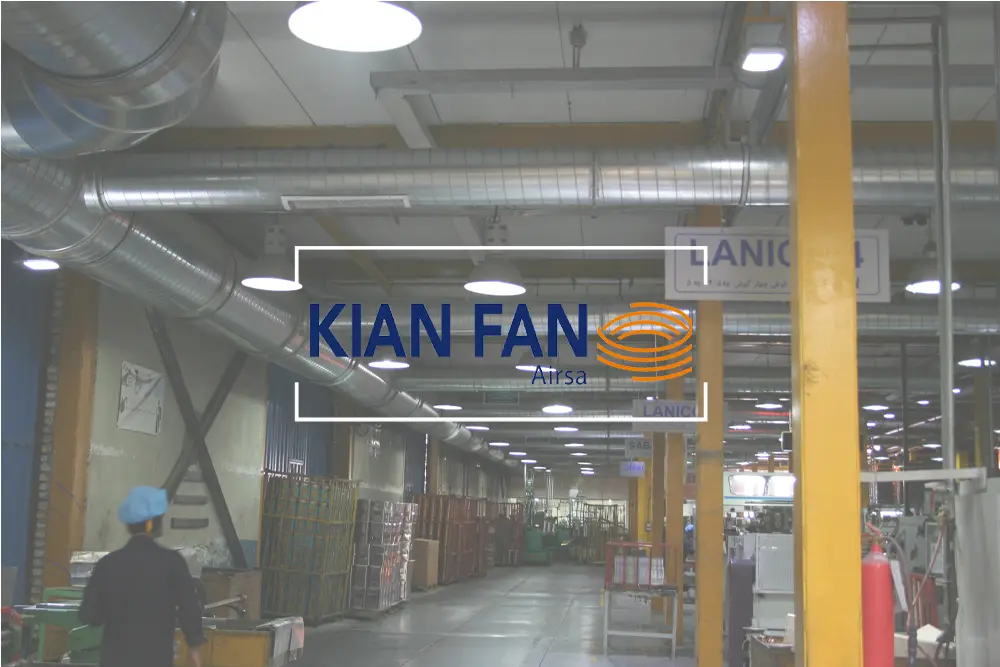
Ducts are not just passages for air; they are a determining part of the performance of the entire air transfer system. Proper design and execution of ductwork ensure that air reaches all points of the production hall, warehouse, or industrial space with minimal pressure drop and uniformly. To achieve this goal, the following are of high importance:
• Selecting the appropriate duct material (galvanized, PVC, or stainless steel) based on humidity, temperature, and type of pollutants
• Precisely determining the size and diameter of ducts based on airflow rate and system pressure requirements
• Designing routes to minimize noise, vibration, and energy waste
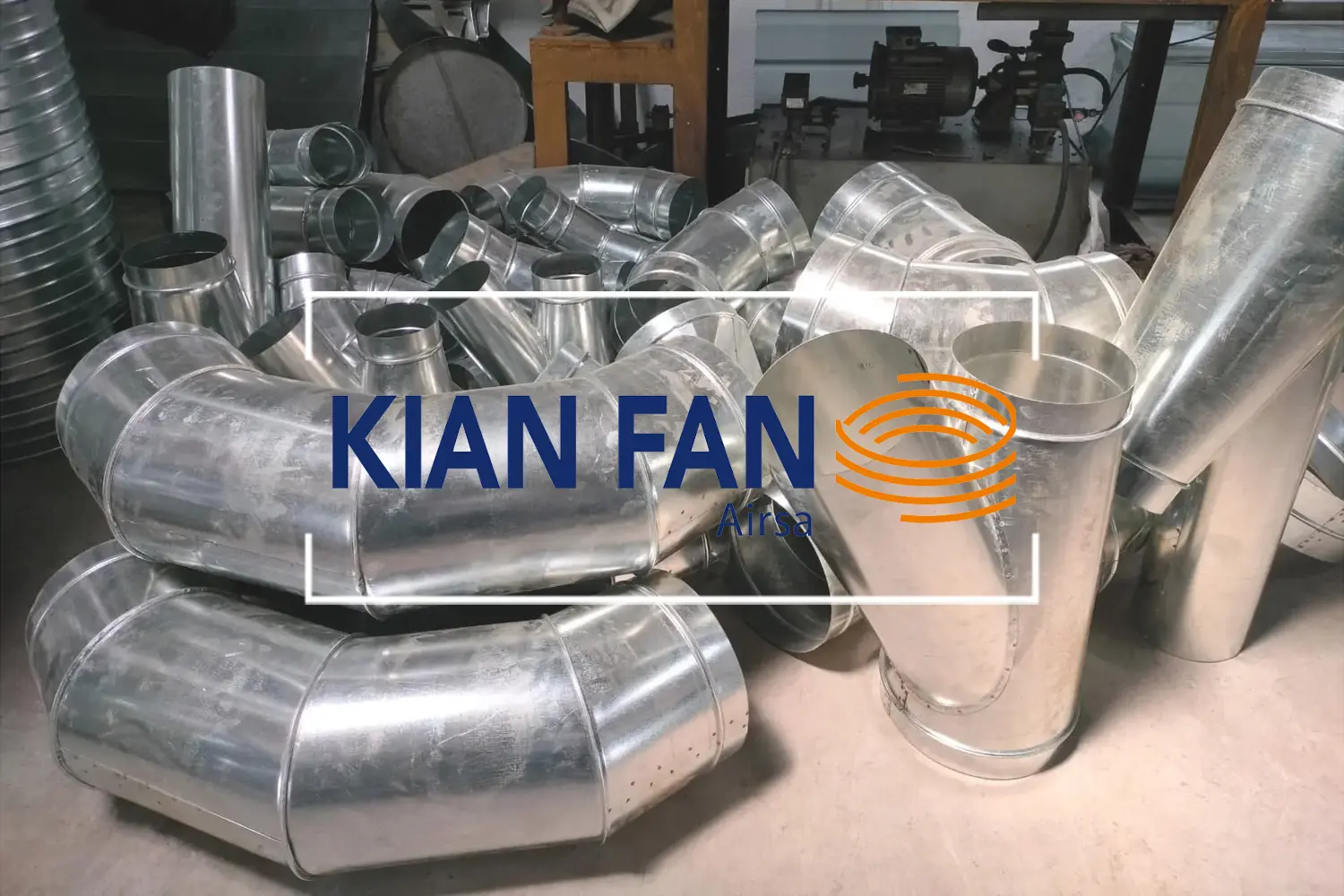
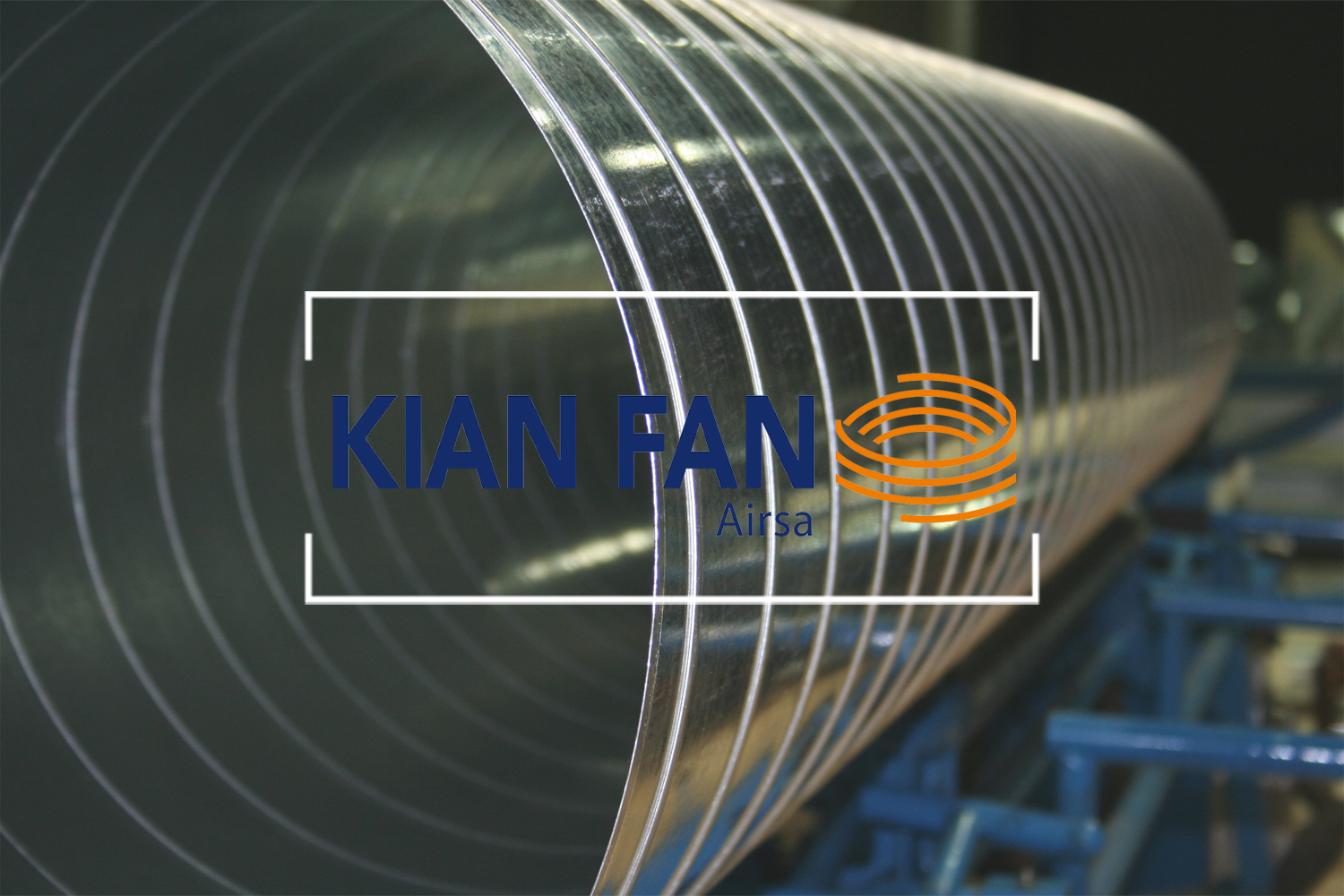
The Industrial Manufacturing Group Kian Fan, with over four decades of specialized experience, designs and produces air transfer ducts in a completely standard manner and coordinated with industrial fans. This group's products, from spiral galvanized ducts to PVC and rectangular ducts, are built with a focus on precise air sealing, high durability, quick installation, and ease of maintenance to ensure your project's ventilation system operates with maximum efficiency and minimum operational costs.
To familiarize yourself with the types of air transfer ducts, review technical specifications, and choose the right option for your project, you can visit the Kian Fan products page on the official website or contact the technical experts of this group.
Types of Industrial Fans and Their Applications
In any air transfer system, the industrial fan is the main and performance-determining part, and its correct choice can directly affect energy consumption, efficiency, and maintenance costs. Based on the method of air movement, fans are usually divided into two main categories:
1. Centrifugal Fans
In these fans, air enters parallel to the impeller axis and exits radially after a 90-degree rotation. This design allows for high static pressure and is ideal for systems with high resistance.
Main Applications:
• Industrial exhaust systems with dense filters (such as HEPA filters)
• Ventilation for heavy industries like cement, steel, and petrochemicals
• Large Air Handling Units (AHU) and systems with cooling/heating coils
• Long networks of air transfer ducts
Kian Fan centrifugal fans, with precise engineering design and high-quality materials, provide the necessary pressure to overcome system resistance and offer high efficiency.
2. Axial Fans
In axial fans, air enters and exits in the direction of the impeller axis. This type of fan can move a large volume of air at low pressure and is suitable for direct ventilation of large spaces.
Main Applications:
• General ventilation for production halls, warehouses, and parking lots
• Cold storage and cooling systems
• Cooling Towers
• Exhausting hot or polluted air in open environments
Axial fans enable rapid and uniform air distribution, creating a more pleasant working environment.
Choosing correctly between a centrifugal and axial fan, or combining them in a system, guarantees air quality and the efficiency of the air transfer system.
The Industrial Manufacturing Group Kian Fan offers various standard and custom industrial fans to cover the diverse needs of industrial and commercial projects. These products are designed and manufactured in compliance with international standards, ensuring high durability and optimal energy efficiency.
To view technical specifications, obtain the full catalog, or receive specialized consultation on air transfer systems, visit the Kian Fan products page on the official website or contact the technical team.
Key Parameters in Choosing an Industrial Fan
Choosing the right industrial fan is an important step in guaranteeing the optimal performance of an air transfer system. An unsuitable fan can reduce efficiency, increase energy costs, and affect the ventilation of the entire complex. The experienced engineers of the Industrial Manufacturing Group Kian Fan, with over four decades of activity in the ventilation industry, examine all important parameters to select the best option suited to the project conditions.
1. Airflow
Airflow is the amount of air the fan moves in one hour, usually expressed in cubic meters per hour (m³/h) or CFM. Choosing the right airflow ensures fresh air flows uniformly through the space, pollutants are effectively removed, and industrial ventilation performs optimally. Airflow lower or higher than actual need causes both insufficient ventilation and energy waste.
2. Static Pressure
This parameter indicates the fan's ability to overcome resistances in the duct path, filters, coils, and dampers. In long networks or systems with dense filters, sufficient static pressure is of high importance. Choosing a fan with inappropriate pressure reduces system performance and increases energy consumption.
3. Power Consumption and Energy Efficiency
The fan's electrical power and its efficiency in converting energy into airflow directly determine operational costs. High-efficiency models, such as IE3 or IE4 motors, reduce electricity consumption and provide a faster return on investment.
4. Noise Level
In environments where employees are present, or in office and hospital projects, the sound of the fan is very important. Aerodynamic design of the impeller, precise balancing, and the use of silencers minimize noise levels and create a quiet and healthy environment.
5. Other Important Parameters
• Material and resistance: Resistance to corrosion, temperature, and chemical environments
• Installation type and dimensions: Compatibility with available space (ceiling, wall, duct)
• Maintenance and access to parts: Designed for easy service and long life
Kian Fan's expertise in providing technical and customized consultation ensures that every project receives an industrial fan suited to its real conditions. This approach not only optimizes the performance of the air transfer system but also reduces long-term costs.
For complete technical information and a guide to choosing an industrial fan, contact Kian Fan experts or visit the official website.
Main Pathways of the Air Transfer System; Everything About Ventilation Ducts
After the industrial fan sets the air in motion, this flow must be transferred through specific and engineered paths to different points of the factory, production hall, or commercial space. This is the responsibility of ventilation ducts, and any weakness in their design, construction, or installation can reduce the efficiency of the entire system.
Ventilation ducts are not just simple pipes; they are precise networks that deliver air to the entire environment with minimal energy waste, low pressure drop, and uniform distribution. Standard duct design includes the following:
• Selecting the appropriate material: Galvanized, PVC, aluminum, or stainless steel, based on environmental conditions such as humidity, chemical materials, or hygiene requirements
• Determining the exact size and diameter: To match airflow rate and system pressure
• Shaping the routes: Round, rectangular, or flexible to reduce noise, vibration, and energy loss
The Industrial Manufacturing Group Kian Fan, with over four decades of experience in producing industrial fans, now also produces ventilation ducts, thus completing the main loop of the air transfer system. The company offers various types of ducts – from spiral galvanized ducts to PVC, flexible, and rectangular ducts – with high quality, long durability, precise air sealing, and easy installation.
Focusing on production quality and adhering to international standards ensures your industrial ventilation system operates reliably with maximum efficiency and minimum cost.
For technical information, viewing duct types, or free specialized consultation, contact the Kian Fan technical team or visit the products page on the official website.
Importance of Proper Design and Execution of Ducts in the Air Transfer System
Poor design or execution of ducts can affect the performance of the entire air transfer system and sharply increase operational costs. When ducts are not designed and installed correctly, system efficiency decreases and numerous technical problems arise that directly impact productivity, environmental health, and energy consumption.
Common problems of poor ductwork:
1. High Pressure Drop
Improper design causes resistance in the path, drastically reducing the output air volume. The result is that the industrial fan cannot supply sufficient air, and some points in the hall lack adequate ventilation, reducing environmental quality and productivity.
2. Air Leakage
Weak connections or open seams cause air to escape from the main path. This wastes energy and forces the system to work harder to compensate for the flow shortage, resulting in increased electricity and maintenance costs.
3. Excessive Noise and Vibration
Turbulent airflow in unsuitable ducts causes noise and vibration. This problem reduces employee concentration in industrial and office environments and endangers health and safety standards in sensitive projects like laboratories and clean rooms.
4. Unequal Air Distribution
In poor design, some points receive more ventilation than needed, while others receive less. This situation can lead to equipment damage, reduced product quality, and even stoppage of production processes.
To prevent these problems, using advanced duct design software (such as CFD), strict adherence to international standards (SMACNA and ASHRAE), and professional execution are essential.
Kian Fan; Experience and Precision in Designing Air Transfer Ducts
The Industrial Manufacturing Group Kian Fan, with over four decades of experience and a skilled engineering team, performs the design and execution of ducts with high precision. This approach ensures airflow reaches all points uniformly, efficiently, and without energy waste, giving your industrial ventilation project the best possible performance.
Types of Ventilation Ducts from the Perspective of a Leading Manufacturer
Ventilation ducts are a vital part of any air transfer system and are categorized diversely based on material, shape, and application. The Industrial Manufacturing Group Kian Fan, with over four decades of experience, produces various standard and custom ducts and recommends the best option based on the real needs of each project.
1. Galvanized Sheet Ducts
The most common and economical option for most industrial and commercial ventilation systems, produced in round (spiral) and rectangular shapes.
Advantages:
• High resistance to corrosion
• Long durability and easy maintenance
• Quick and easy installation
Application: Factories, production halls, commercial centers, and construction projects.
2. Stainless Steel Ducts
Ideal for humid, corrosive environments or those with high hygiene requirements.
Advantages:
• Excellent resistance to chemicals and rust
• Non-porous surface, easy to clean
• Very high durability in harsh conditions
Application: Food, pharmaceutical industries, hospitals, laboratories, and clean rooms.
3. Aluminum Ducts (Flexible or Semi-rigid)
A suitable option for specific projects due to light weight and appropriate resistance.
Advantages:
• Light weight and reduced structural load
• Easy installation and relative flexibility
• Appropriate resistance to humidity
Application: Systems with weight limitations, local ventilation, and light projects.
4. Flexible Ducts
Corrugated with internal aluminum or PVC layer and thermal insulation.
Advantages:
• High flexibility for complex routes
• Quick installation without need for many fittings
• Possibility of insulation to reduce thermal loss
Application: Connecting main equipment to the fixed network, local ventilation, and spaces with limited access.
5. Fabric Ducts (Textile Ducts)
A modern solution for uniform air distribution without direct flow and noise.
Advantages:
• Completely uniform air distribution
• Low noise level
• Beautiful appearance and possibility of customizing color and shape
Application: Sports halls, cold stores, supermarkets, conference halls, and spaces with high ceilings.
With a wide range of products and a commitment to quality, Kian Fan ensures that every industrial ventilation project is executed with the most suitable type of duct, offering the best performance, minimum operational cost, and maximum durability.
Beyond a Fan; Entering the World of Advanced Air Transfer Systems
In modern factories and industrial spaces, simply combining a few fans and a few meters of duct is no longer enough. Today, there is a greater need for a smart and integrated air transfer system that manages all components in coordination. This need has led to the formation of Air Handling Units (AHU).
In these advanced systems, it is not a collection of separate parts; rather, it is an engineered package that simultaneously:
• Supplies fresh air
• Filters pollutants, dust, and suspended particles
• Heats or cools the air
• Controls air humidity and pressure
Air Handling Units, by combining powerful industrial fans, multi-stage filters, thermal coils, control dampers, and smart management systems, maintain air quality at the highest level. This leads to increased employee productivity, equipment protection, and reduced energy consumption.
The Industrial Manufacturing Group Kian Fan, with over four decades of experience in industrial ventilation, offers advanced solutions for the design, production, and execution of integrated air transfer systems. The company supplies Air Handling Units and custom systems tailored to the real needs of industrial, commercial, and hygiene projects.
For more information about Air Handling Units, custom air transfer systems, or free specialized technical consultation, visit the Kian Fan industrial ventilation products page on the official website or contact the engineering team.
View Kian Fan Products
What is an Air Transfer System and How Does It Work?
A modern air transfer system – often referred to as an Air Handling Unit (AHU) – is an integrated and engineered assembly responsible for supplying, processing, and distributing quality air in buildings, factories, and industrial spaces. This system goes beyond a simple fan and, by combining various equipment, precisely controls air quality, temperature, humidity, and pressure.
Main Components of an Air Transfer System
An Air Handling Unit is usually an insulated metal chamber and includes the following components:
• Fresh air intake and return air vents
• Multi-stage filters
• Heating and cooling coils
• Humidity control equipment
• Powerful fans (usually centrifugal)
• Dampers and silencers for flow control and noise reduction
Stages of Air Transfer System Operation
1. Mixing Air
Fresh air from outside and return air from inside the environment are combined in a specific ratio to optimize energy consumption and maintain air quality.
2. Filtration
Air passes through various filters to remove dust, suspended particles, pollutants, and microorganisms. Depending on the need, filters ranging from standard (G4) to advanced (HEPA/ULPA) are used.
3. Heating or Cooling
Air passes through thermal coils to reach the desired temperature. In coils, hot water, chilled water, or refrigerant flows.
4. Humidity Control
If needed, humidifiers increase air humidity, and dehumidifiers or cold coils reduce it to maintain standard relative humidity (40-60%).
5. Air Distribution
After processing, air is directed to the duct network by powerful centrifugal fans and transferred to all points of the environment through vents and diffusers.
This process ensures that indoor air is always of suitable quality, energy consumption is optimized, and ideal conditions are provided for employee health, equipment protection, and production quality.
The Industrial Manufacturing Group Kian Fan, with over four decades of experience, from designing industrial fans and ventilation ducts to advanced Air Handling Unit solutions, is a reliable companion for your industrial ventilation projects.
The Air of the Future, with Today's Technology
In today's world, air quality, energy efficiency, and human health are no longer optional choices; they are a fundamental necessity for industrial, commercial, and manufacturing environments. The air transfer system has also evolved from a simple fan to smart and integrated Air Handling Units to meet the complex needs of modern environments.
The Industrial Manufacturing Group Kian Fan, with over four decades of experience in producing industrial fans, designing and constructing air transfer ducts, and offering comprehensive industrial ventilation solutions, has solidified its position as a reliable and key partner in this field. Deep technical expertise, a commitment to high quality, and a complete focus on customer needs are the three main pillars of this company's success.
If you are looking for a comprehensive and engineered solution for the air transfer system in your industrial or commercial unit, Kian Fan can be your trusted partner. By providing standard equipment, optimizing energy consumption, and ensuring long durability, the company facilitates a healthier working environment and a cleaner atmosphere for your complex. To receive free specialized consultation, custom ventilation system design, or a price quote for Kian Fan products, contact the engineering team or visit the official website.
Frequently Asked Questions (FAQ)
1. What is an air transfer system?
An engineered assembly for supplying, filtering, and distributing healthy air and controlling temperature and humidity.
2. What role does an industrial fan play?
The fan creates the main airflow and determines energy consumption and system efficiency.
3. How important are ducts?
They are the main path for air transfer; incorrect design causes pressure drop, leakage, and unbalanced ventilation.
4. What advantages do Air Handling Units offer?
They perform ventilation, filtration, heating/cooling, and humidity control simultaneously, increasing efficiency and employee health.
5. Why is this group a suitable choice?
The combination of experience, quality, custom design, and professional support guarantees the execution of an optimized and economical industrial ventilation system.
Related Links
Kian Fan, Manufacturer of Industrial Fans, Spiral and PVC Ducts
Kian Fan Galvanized Spiral Duct | A Professional Choice for Industrial Ventilation Systems
Guide to Buying Industrial Ventilation Equipment: Why Do Projects Choose Kian Fan?
Manufacturing Quality of Kian Fan Fans and Ventilation Ducts; The Result of Production with European Machinery